Translate

Zoeken in deze blog

Posts tonen met het label Moby Dick. Alle posts tonen

maandag 12 september 2022

Moby Dick

Entering that gable-ended Spouter-Inn, you found yourself in a wide, low, straggling entry with old-fashioned wainscots, reminding one of the bulwarks of some condemned old craft. On one side hung a very large oilpainting so thoroughly besmoked, and every way defaced, that in the unequal crosslights by which you viewed it, it was only by diligent study and a series of systematic visits to it, and careful inquiry of the neighbors, that you could any way arrive at an understanding of its purpose. Such unaccountable masses of shades and shadows, that at first you almost thought some ambitious young artist, in the time of the New England hags, had endeavored to delineate chaos bewitched. But by dint of much and earnest contemplation, and oft repeated ponderings, and especially by throwing open the little window towards the back of the entry, you at last come to the conclusion that such an idea, however wild, might not be altogether unwarranted. (https://www.gutenberg.org/files/2701/2701-h/2701-h.htm)

Een van mijn lievelingsboeken is Moby Dick. Op https://www.gutenberg.org/ebooks/2701 vind je een gratis versie om deze klassieker te lezen.

Moby-Dick; of, de Walvis is een roman van de Amerikaanse schrijver Herman Melville uit 1851, over de jacht op de witte potvis Moby Dick[a] door kapitein Achab van de walvisvaarder Pequod, die in een eerdere confrontatie met het dier zijn been heeft verloren. Deze potvis zou zoveel rampen hebben veroorzaakt voor de walvisvaarders dat het dier uitgroeide tot een mythe. Melville droeg het werk op aan de bevriende schrijver Nathaniel Hawthorne, 'als blijk van mijn bewondering voor zijn begaafdheid'.[b] Hoewel de roman bij verschijning flopte en al snel vergeten was, behoort de openingszin ('Call me Ishmael') thans tot de bekendste openingen uit de hele wereldliteratuur. In de 20e eeuw verwierf Moby-Dick de reputatie een van de belangrijkste Amerikaanse bijdragen aan de literatuur te zijn. Het verhaal is gebaseerd op Melvilles eigen ervaringen als walvisvaarder op de Acushnet in 1841. Het slot van de roman is gebaseerd op het lot van de Essex, die in 1820 door een walvis tot zinken werd gebracht. Moby Dick zelf is gebaseerd op de beruchte ongrijpbare witte potvis Mocha Dick, die in de jaren tussen 1810 en 1840 herhaaldelijk de wateren onveilig maakte. De schrijfstijl kenmerkt zich door een rijke woordenschat, een complexe, barokke zinsbouw, humor, metaforen en symboliek. Tal van registers worden benut, waaronder preken, regionale accenten en hoofdstukken in een stream-of-consciousness stijl. Elk hoofdstuk vormt een afgeronde eenheid; sommige zijn opgebouwd als een anatomische verhandeling of een pseudo-taxonomie van walvissoorten, andere zijn opgezet als de tekst van een toneelstuk of zelfs een ballet of een alleenspraak. Grote invloed ging dan ook uit van de toneelschrijver Shakespeare, wiens stijl en taal het boek doordesemen. De thematiek betreft de aard en betrouwbaarheid van kennis en waarneming, de vrije wil versus predestinatie, sociale status, het concept van goed en kwaad, en de vraag omtrent het wel of niet bestaan van goden. Op het laatste moment veranderde Melville de titel van The Whale naar Moby-Dick. De nieuwe titel kwam te laat voor de Britse editie in drie delen, die eerder dan de Amerikaanse verscheen. In de Britse editie ontbrak de epiloog waarin het overleven van Ishmael beschreven wordt. Dit leidde tot kritiek in de recensies, omdat het nu leek alsof het verhaal verteld werd door een verdronken bemanningslid. Ook werd de Britse editie sterk gecensureerd, met name waar het blasfemische en seksuele passages betrof: zelfs passages over het seksleven van walvissen sneuvelden, terwijl veel blasfemisch opgevatte frasen in feite verwijzingen zijn naar Miltons Paradise Lost. Daarnaast werd alles geschrapt wat maar enigszins als kritiek op de Engelsen kon worden uitgelegd: zo verdween het volledige hoofdstuk 25 over de rol van walvisolie bij de Britse kroningsplechtigheid. De gemengd ontvangen roman werd geen succes in de 19e eeuw. Op de titelpagina's van Melvilles latere boeken staat wel vermeld dat hij de auteur van Typee was, maar niet van Moby-Dick. Na de Eerste Wereldoorlog nam de studie van de Amerikaanse literatuur een aanvang, en in de jaren na de herdenking van Melvilles honderdste geboortedag steeg zijn reputatie gestaag en in het bijzonder die van Moby-Dick. (https://nl.wikipedia.org/wiki/Moby-Dick_(boek)) Zie ook https://en.wikipedia.org/wiki/Moby-Dick.

Moby Dick De witte potvis waar het verhaal om draait. Hij staat bekend als een uitzonderlijk agressief dier dat al vele schepen heeft aangevallen en onder andere Achabs been heeft afgebeten. Hij wordt vaak gezien als een symbool voor de zee, de natuur, het noodlot en zelfs God. (https://nl.wikipedia.org/wiki/Moby-Dick_(boek))

Het is niet met zekerheid te zeggen wanneer de conceptie van het boek bij Melville opkwam. Melvilles belevenissen op een walvisvaarder in 1841 vormen de basis van het boek. Een van de door Melville gebruikte bronnen is J. Ross Browne, Etchings of a Whaling Cruise (1846). Melville recenseerde dit boek voor de Literary World van 6 maart 1847. Gewoonlijk beschouwen onderzoekers de lente van 1850 als de periode waarin Melville met het schrijven van het boek begon.[1] In die tijd verwittigde Melville zijn uitgever dat hij in de herfst van dat jaar een avonturenboek over de walvisvaart af zou hebben. Uiteindelijk duurde het een jaar langer. ... De basis voor de roman zijn Melvilles eigen ervaringen op walvisvaarders in 1840-1841 en 1842. Volgens Wilson Heflin, die het meeste onderzoek aangaande Melvilles loopbaan als zeeman heeft verricht, monsterde Melville met Kerstmis 1840 aan op de Acushnet, een toen nieuwe walvisvaarder die aan haar eerste reis begon onder leiding van kapitein Valentine Pease. Volgens de bewaard gebleven lijst van bemanningsleden bestonden deze bij vertrek uit vier gezagvoerders (behalve de kapitein een eerste en tweede officier, en een derde maat), vier specialisten, waaronder een zwarte kok, en zestien manschappen. Onder deze laatste groep bevonden zich Melville zelf en de eveneens 21-jarige Richard T. Greene, die later samen zouden deserteren en het avontuur beleven dat Melville in zijn debuut Typee beschreef. De bemanning telde vijf buitenlanders, waaronder vier Portugezen; de timmerman was een Schot. De rest waren (genaturaliseerde) Amerikanen, waaronder drie zwarten: twee gewone zeelieden en de scheepskok. Een derde van de bemanning had niet eerder op een walvisvaarder gevaren.[2] ... Enkele van de sensationeelste aspecten zijn gebaseerd op historische gebeurtenissen. De witte walvis Moby Dick zelf is tot de naam aan toe geïnspireerd op de beschrijvingen van de witte potvis Mocha Dick.[3] Ook het tot zinken brengen van de Pequod door Moby Dick is geen ongeloofwaardige fantasie, maar gemodelleerd naar het ware verslag van de door een walvis getorpedeerde en tot zinken gebrachte walvisvaarder Essex. Daarnaast gebruikte Melville een reeks van andere walvisboeken om de cetologische hoofdstukken te kunnen schrijven. Toen hij de roman aan het schrijven was, maakte Melville kennis met de auteur Nathaniel Hawthorne. Vijf boeken vormen Melvilles belangrijkste bronnen voor de hoofdstukken over walviskunde: de belangrijkste bron is het destijds gezaghebbende boek van Thomas Beale, Natural History of the Sperm Whale uit 1843. Melville schafte het boek aan op 10 juli 1850. De belangrijkste ontlening is de organisatie van informatie in reeksen van hoofdstukken.[4] Daarna komt Frederick Debell Bennett, A Whaling Voyage Round the Globe, from the Year 1833 to 1836 (1840). Ook aan Bennett ontleende Melville de distributie van informatie in hoofdstukken, zij het in mindere mate dan aan Beale.[5] De derde bron is J. Ross Browne, Etchings of a Whaling Cruise, with Notes of a Sojourn on the Island of Zanzibar. To Which is Appended a Brief History of the Whale Fishery: Its Past and Present Condition (1846). Enkele passages uit dit boeke komen sterk overeen met passages in Moby-Dick. De vierde bron is Henry T. Cheever, The Whale and His Captors uit 1850. Hoewel van veel minder belang dan de eerste drie bronnen, hielp de levendige en dramatische schildering van de walvisvaart Melville op minstens twee plaatsen van zijn eigen werk.[6] Anders dan deze vier handelt de vijfde bron niet over de potvis maar over de Groenlandse walvis: William Scoresby, Jr., An Account of the Arctic Regions with a History and Description of the Northern Whale Fishery uit 1820. Scoresby is een studie van twee boekdelen en werd meteen na publicatie het standaard naslagwerk over de walvisvaart. Melville plunderde het boek, enkele malen in de vorm van satire of parodie, een teken dat zijn oprechte bewondering voor Scoresby niet zonder reserve was. Vincent suggereert dat wellicht het gebrek aan humor van Scoresby was, of de dichtheid aan droge en soms irrelevante gegevens die zijn spotlust opwekten. Maar de meest waarschijnlijke reden is dat Scoresby's Groenlandse walvis de grootste rivaal van de potvis was in de belangstelling van het publiek, zodat Melville zich vanwege zijn campagne om de potvis te verheerlijken verplicht voelde om alles wat betrekking had op Balaena mysticetus uit te lachen. Scoresby, schreef Melville in een drukproef, 'wist niets en zegt niets over de grote potvis, waarmee vergeleken de Groenlandse walvis bijna geen vermelding waard is.'[7] ... De roman vertoont thematische verwantschap met de klassieke en moderne literatuur zoals Oedipus en Dante Alighieri's Divina Commedia en tevens met de Bijbelboeken Jona (over de man die door een walvis werd opgeslokt) en Job (over de man die vragen stelde naar het wezen van de Schepper en de schepping en over de man die als enige een ramp overleefde en kon vertellen wat er gebeurd was). Belangrijk is ook de naamgeving van de hoofdpersoon Achab als verwijzing naar de oudtestamentische koning Achab die zich verzette tegen God. De verteller Ishmael is genoemd naar de zoon van Abraham en de slavin Hagar: zijn naam betekent veelzeggend "God luistert". ... Kort voordat het boek verscheen stond het onderwerp ervan in de belangstelling, doordat een walvis het schip Ann Alexander tot zinken had gebracht. Over dit incident handelt een groot deel van de eerste aflevering van de recensie die in twee delen in de Literary World verscheen, op 15 en 22 november, het tijdschrift dat in 1850 Melvilles essay Hawthorne and His Mosses had gepubliceerd. De anonieme recensie wordt toegeschreven aan Evert Duyckinck, een bekende van Melville. (https://nl.wikipedia.org/wiki/Moby-Dick_(boek))

Nu is dit geen boekenblog, maar een bierblog. Laat Kompaan nou toevallig een witte IPA hebben uitgebracht met als naam: Moby Dick.

Brouwerij Kompaan is een jonge Haagse bierbrouwerij die sinds 2011 bestaat. De brouwerij is opgericht door de vrienden Jasper Langbroek en Jeroen Ditmarsch. In de beginjaren werd er brouwcapaciteit bij andere brouwerijen ingekocht, maar sinds 2015 beschikt Kompaan over een eigen brouwlocatie in Den Haag. Hier worden bieren met namen als ‘Kameraad’, ‘Vrijbuiter’, ‘Handlanger’ en ‘Bloedbroeder’ gebrouwen. Vooral de Bloedbroeder is een bekend bier van Kompaan, omdat deze imperial stout waaraan een beetje port is toegevoegd, in 2017 de prijs voor het beste bier van Nederland in de wacht sleepte. (https://www.burgbieren.nl/kompaan-bier/)

Bier soort White IPA Bitterhop / Aromahop Rakau, Southern Cross EBC 9.3 IBU 57.5 Herkomst Nederland Inhoud 440 ml Verpakking Blik / Can Alcohol Percentage 6.4% (https://www.sterk.amsterdam/kompaan-moby-dick.html)

BATTLE ROYALE MOBY DICK REVISITED Battle Royale Loaded with citrus and pine, the uniquely American “C”hops varieties are the driving force behind this Moby Dick inspired battle, enforced by Amarillo and Ekuanot to give it a tropical, lemon and piney punch. 6.4 57.8 9.3 HOPS AMARILLO CASCADE CHINOOK COLUMBUS EKUANOT MALTS BARLEY CORN WHEAT (https://kompaanbier.nl/beers/battle-royale-moby-dick-revisited/)

Het is niet het eerste bier dat ikdit aar drink, dat is vernoemd naar een walvis, zie https://biervat.blogspot.com/2022/08/davo-in-deventer.html. Het bier van Kompaan is ook niet het eerste genotsproduct dat is vernoemd naar Moby Dick:

Moby Dick is een sativa-dominante hybride wietplant die oogsten ter grootte van een walvis produceert. Deze populaire soort scoort ook met waanzinnig veel kracht en een fantastische smaak.
Barney's Farm had alle reden om Moby Dick te vernoemen naar het mythische beest uit de roman van Herman Melville. Deze soort is namelijk zeer krachtig en biedt enorme opbrengsten. Onder cannabisliefhebbers is deze prijswinnende sativa-kruising een echte legende. (https://www.zamnesia.nl/blog-moby-dick-cannabis-strain-review-informatie-n479)

En ook niet het eerste bier:

Ramses Bier Moby Dick is een oranjekleurige Dunkelweizen gebrouwen met slechts een hopsoort: Wakatu. (https://www.bierista.nl/ramses-moby-dick)

Het bier is troebel lightgeel met wit schuim. Het smaakt tropisch. Is het geen NEIPA? Het ruikt lekker fris en smaakt niet echt bitter. Het doet denken aan zo'n fruitig NEIPA. Wat vinden anderen ervan?

Kompaan Battle Royale Series Moby Dick Revisited is een White IPA. Het bier heeft een alcoholpercentage van 6,4%. ... Smaak zoetmoutig, fris prikkelend/iets scherp, fruitig, iets steenfruit, ananas, citrus-tropisch. iets bloemig-grassig-lekker hoppig met iets een bittertje in de afdronk. iets wrang in de nasmaak. (https://www.bierista.nl/kompaan-battle-royale-series-moby-dick-revisited) 

Moby Dick Revisited is een nieuwe editie in de Battle Royale Series van Kompaan. Deze White IPA is gebrouwen met Amerikaanse C' hops, Amarillo en Ekuanot voor een heerlijke tropische smaak. Ook proef je Citrustonen en iets dennen-achtig. Een heerlijk zacht en verfrissend bier! (https://www.acedrinks.nl/producten/kompaan-battle-royal-series-moby-dick-revisited-16235)

Moby Dick Revisited (6,4%) – Een White IPA – Gek genoeg heeft die naam niks te maken met de kleur, maar met de verbastering van “wheat” naar het Nederlands, en weer terug naar Engels. Gebrouwen met ruim 30% tarwe maakt deze bad boy goed doordrinkbaar. De klassieke hopsoorten geven het bier tonen van citrus en dennennaalden. (http://decraftclub.nl/taplijst/)

Euh, wacht even.... 'AMARILLO CASCADE CHINOOK COLUMBUS EKUANOT' , ja Amarillo, Cascade, Chinook en Columbus zijn klassiekers. En Ekuanot?

The Ekuanot hop was developed by the Hop Breeding Company and first released in 2014 as HBC 366... Ekuanot is an aroma hop that is typically used in only late boil additions, including dry hopping. Ekuanot has fruity aromatics such as lemon, lime, pithy orange, tropical fruit, berry, papaya, and sometimes apple. Along with these there may be more herbal notes, such as sage and eucalyptus. (https://beermaverick.com/hop/ekuanot/)

Ekuanot™ (formerly HBC 366) was commercially released in 2014 as “Equinox” by the Hops Breeding Company in Yakima-- and subsequently renamed due to trademark issues. (https://www.barthhaas.com/en/hop-varieties/ekuanot)

Ekuanot® (formerly HBC 366) was commercially released in 2014 as “Equinox” by the Hops Breeding Company in Yakima, and subsequently renamed due to trademark issues. It has intense and unique fruity and citrus notes including melon, berry, citruslime, apple and papaya. Ekuanot® also contains some spicy, green pepper note. This hop brand has high alpha acids content and high essential oil and is known for its vibrant yellow color during its early growth in the spring. Note Formerly HBC 366 and Equinox Aroma/Flavor: Green pepper, papaya, lime, apple blossom Alpha Acids* 14.5 - 15.5 % Beta Acids 4.5 - 5.5 % Cohumulone 32 - 38 % of alpha acids Total Oil 2.5 - 4.5 ml/100g Myrcene 30 - 45 % of total oil Humulene 12 - 20 % of total oil Caryophyllene 8 - 12 % of total oil Farnesene < 1 % of total oil EKUANOT® HOP SUBSTITUTIONS  Ekuanot is high in citrus, fruit, and herbs making it a great hop for aroma. El Dorado, Mosaic, and Talus all carry these same flavor keys. Try any of these three hops in your next brew to substitute Ekuanot.  (https://yakimavalleyhops.com/products/ekuanot-hop-pellets)

Ekuanot is dus zeker geen klassieker. 

Amarillo, Cascade, Chinook en Columbus?

Amarillo

The Amarillo hop was accidentally discovered by Virgil Gamache Farms in 1990 when they found it growing alongside their Liberty hop field. They began cultivating it in 1991, then patented it as a new variety in 2003. It was originally patented under the identifier of VGXP01. It was released to the public shortly after receiving the patent. Amarillo is sometimes referred to as Amarillo Gold. Amarillo is an aroma hop that is typically used in only late boil additions, including dry hopping. Amarillo hops impart a distinct flowery, spicy, tropical, citrus-like flavor and aroma in beer. The citrus has qualities of orange and lemon, like Cascade, but much stronger. Other aroma descriptors include grapefruit, melon, apricot and peach. Amarillo hops offer solid bittering properties in the 9-11% Alpha Acid range. It also packs one of the highest myrcene oil contents (60-70% of total oils) of any hop. This extremely high Myrcene content gives it a very sweet citrus flavor and aroma that is closer to oranges than grapefruit. (https://beermaverick.com/hop/amarillo/)

AMARILLO® VGXP01 c.v. is one of those legendary varieties and is now in the top 10 most widely used hops. It was developed by Virgil Gamache Farms in the Yakima Valley and was originally named VGXP01 cv. Amarillo® offers solid bittering properties in the 9-11% Alpha Acid range and it packs one of the highest myrcene oil contents (60-70% of total oils) of any hop. This gives it a very sweet citrus flavor and aroma that is closer to oranges than grapefruit. The citrus character is backed by some light floral notes as well as melon and peaches. AMARILLO® VGXP01 c.v. tends to have lower yields, but is extremely resistant to downy and powdery mildew.  (https://yakimavalleyhops.com/products/amarillo-hop-pellets)

Cascade

Cascade is the hop that started a revolution. Developed by the USDA at Oregon State University for release in 1972, Cascade boasts a myrcene content of 45-60% of its total oil composition—this is the pungent aroma compound in thyme, marijuana, and yes—hops. Though you may not have known what it was called, you've definitely tasted it. (https://www.seriouseats.com/how-to-indentify-hops-in-beer-centennial-columbus-cascade-tastes-like)

Chinook

The Chinook hop is a cross between a Petham Golding and a USDA-selected male with high alpha-acids and good storage properties.... Chinook is a dual-purpose hop that can be used in all hop additions throughout the brewing process. Chinook can be slightly spicy and have a smoky earthiness quality. It has an impressive pine and resin character, with distinct spice and grapefruit. Use sparingly in the boil as it can add a harsh bitterness if overused. (https://beermaverick.com/hop/chinook/)

Chinook hops are suitable for any stage of the boil. They’re not only a natural for American-style Pale Ales and IPAs, but they also find their way into seasonal ales, barley wine and some porters and stouts. The variety is a cross between Petham Golding and a USDA male and features a pine-like, spicy bouquet with robust flavors of grapefruit. (https://www.hopslist.com/hops/dual-purpose-hops/chinook/)

Chinook hops are a product of the USDA breeding program in Washington State. It was originally bred as a bittering hop back in 1985, but has recently been recognized as a dual-purpose hop that is well rounded and suited for many different styles. It has predominately spicy and piney characteristics that transfer through into the flavor and aroma. Chinook also contributes bright grapefruit notes that accentuate its clean bitterness. Chinook hops are noted for their higher Geraniol content, which is biotransformed by yeast into Citronellol a highly-sought-after aroma compound in fruit-forward IPAs. Aroma: Fruity, Piney, Spicy, and similar to cascade. Alpha Acid: 12.5 to 14.0% Typical Usage: Dual purpose. (https://yakimavalleyhops.com/products/chinook-hop-pellets)

Colombus

Columbus, thankfully, is more distinctive. Also known as Tomahawk, Zeus, or CTZ (Columbus, Tomahawk and Zeus, appropriately), Columbus is treasured for its high oil content, which yields an especially potent aroma. It smells something like earth, herbs, or marijuana, and often takes a supporting role providing depth and complexity to brighter hop bills containing citrusy top notes from Cascade, Centennial, or other hops. Though much of the beer community prefers to avoid using the word "dank" to describe beer, the resinous Columbus is often a driving force behind that description. (https://www.seriouseats.com/how-to-indentify-hops-in-beer-centennial-columbus-cascade-tastes-like)

Columbus has an unknown origin. It is often referred to as CTZ (Columbus / Tomahawk / Zeus) due to Hopunion and YCH attempting to register the same hop with different names. After an agreement was reached between the two names, both names were registered. They are technically the same hop however. It is genetically distinct from Zeus hops, but has a very similar profile. The exact lineage of Columbus is unknown, however it is widely assumed that Brewer’s Gold and several undisclosed American varieties played significant parenting roles. It was developed in the 1980s by Charles Zimmerman who had worked for the U.S. Department of Agriculture until 1979 and who subsequently held positions with various private hop-processing and trading companies. (https://beermaverick.com/hop/columbus/) 

Columbus, or CTZ (Columbus, Tomahawk, and Zeus), is a high alpha varietal with a neutral bitterness and intense aroma. A true dual-purpose hop that works very well for bittering, but shines just as easily as a late addition. CTZ hops have an earthy, spicy character that is great for bittering. But when used as an aroma addition, you'll find more floral and citrus notes come out that can be very pungent. Columbus is a perfect choice for IPAs, Pales, Imperial Ales, Hazys, Stouts, and Lagers. (https://www.morebeer.com/products/columbus-hops-pellets.html)

Although genetically different, Zeus, Columbus and Tomahawk are often referred to as part of CTZ. CTZ however is not a specific hop, but instead a name given to a trio of similar hops. The exact lineage of CTZ is unknown, however it is widely assumed that Brewer’s Gold and several undisclosed American varieties played significant parenting roles. It was developed in the 1980s by Charles Zimmerman who had worked for the U.S. Department of Agriculture until 1979 and who subsequently held positions with various private hop-processing and trading companies. (https://beermaverick.com/hop/ctz/)

Okee, die C hops in het bier zijn legendes, net zoals de roman Moby Dick.

zaterdag 14 november 2015

Moby Dick's witte walvis


It’s a Whale Of An Ale: Portland, Ore’s Rogue Brewery Makes A “Moby Dick” Flavored Beer

While book lovers have been known to say they want to sink their teeth into a good book, bibliophiles rarely say anything about wanting to take a sip of a favorite read. That could all change when White Whale Ale hits the craft beer market.
While beer aficionados know that ales can taste hoppy, bitter, or fruity, White Whale Ale may have hints of a few other adjectives and nouns and verbs, too. You see, White Whale Ale was brewed with the pages of Moby Dick thrown into the mix.
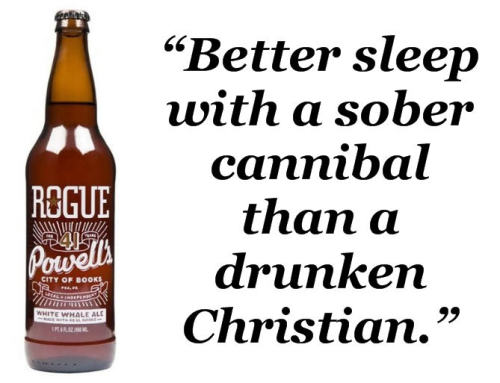
Oregon-based brewer Rogue Ales and Spirits teamed up with Portland, Ore., bookstore Powell’s Books to create a beer aimed at Herman Melville connoisseurs and ardent beer fiends. The ale, made in honor of Powell’s 41st anniversary, was infused with the pages of Moby Dick. According to Beer Advocate, Michael and Emily Powell, the bookstore’s founders, along with Rogue Brewmaster John Maier, took a few pages from a copy of the book and put them into the brew kettle. The result? White Whale Ale, a quaff-ready ode to the adventures of the Pequod (http://newsfeed.time.com/2012/11/23/its-a-whale-of-an-ale-portland-ores-rogue-brewery-makes-a-moby-dick-flavored-beer/).


Powell's Books and Rogue Ales and Spirits, two unique Oregon businesses, have collaborated to create a beer that's dedicated to everyone with a thirst for books and artisan craft beer: White Whale Ale.
White Whale Ale is infused with the sea-faring spirit of Moby-Dick. Michael and Emily Powell took pages from a copy of the book and, along with Rogue Brewmaster John Maier, placed them into the brew kettle. Moby-Dick is especially meaningful to Michael Powell, who was inspired to become a bookseller when he found a first edition of the novel in a box of books he'd purchased.
White Whale Ale was brewed in honor of Powell's Books 41st Anniversary. Powell's Books is the one of the world's great independent and family run bookstores. Its flagship store in downtown Portland, Oregon covers an entire city block and contains more than one million new and used books (www.beeradvocate.com/community/threads/rogue-releases-white-whale-ale-infused-with-pages-from-the-novel-moby-dick.50618/).

Powell's Books has collaborated with Rogue Ales and Spirits to create a beverage for anyone who has a thirst for books and artisan craft beer — White Whale Ale, infused with the seafaring spirit of Moby-Dick. The concept behind the project was to go where beer has never gone before — by adding actual pages from a copy of Moby-Dick to the brew.
This brand-new ale was truly inspired by a love of literature. At an auction in Chicago, Michael Powell landed a first edition of Herman Melville's The Whale (renamed Moby-Dick in subsequent editions), and the book has occupied a special place in his heart ever since. In part, this special-edition beer is a tribute to Michael and his family, as well as to the legacy of Powell's.
Powell's partnership with Rogue couldn't have come at a better time. White Whale Ale was brewed in honor of the 41st anniversary of Powell’s Books. The launch of Powell's very own beer caps off a very special year for the store (www.powells.com/rogue/).


Een bier gemaakt van bladzijdes van een boek???
- This sounds outrageous. I have to buy it.
- If this was April 1st... Since it isn't, I can only assume Rogue just flipped us all the bird. Craft has officially jumped the shark.
- I already wasn't going to purchase this since it's Rogue, but I just had to click this to see if this was a joke. Apparently it is not. I could maybe, MAYBE see this if they use old copies of the book because after a while some of the chemicals in the pages break down and cause a vanilla-like aroma to form. This is what attributes to the "old book smell" that people enjoy so much (zie www.mentalfloss.com/blogs/archives/134136). If these are copies that were published in the last half-century (more likely since I can't imagine making beer by destroying valuable and possibly rare books is an awesome idea), this beer is going to be awful insofar as it will taste like eating a ream of paper. It will probably be awful regardless. As Dope said, there's still about a 99.853% chance that this will be better than Maple Bacon Abomination Ale was (according to every BA's opinion on the beer; I haven't had it myself) (www.beeradvocate.com/community/threads/rogue-releases-white-whale-ale-infused-with-pages-from-the-novel-moby-dick.50618/).

A combination of grassy notes with a tang of acids and a hint of vanilla over an underlying mustiness” is how an international team of chemists describes the unique odor of old books in a study. Poetic, sure, but what causes it?
(http://mentalfloss.com/article/31235/what-causes-old-book-smell).

Even terug naar het oude boek:

Moby-Dick; or, The Whale (1851) is een boek van de Amerikaanse schrijver Herman Melville, genoemd naar een ongewoon grote en agressieve witte potvis die in het boek een centrale rol speelt. Deze potvis zou zoveel rampen hebben veroorzaakt voor de walvisvaarders dat het dier uitgroeide tot een mythe. De roman betekende het einde van Melvilles reputatie als populair auteur en verkreeg pas na 1920 bekendheid (http://nl.wikipedia.org/wiki/Moby-Dick_(boek)).

The product of a year and a half of writing, the book is dedicated to Nathaniel Hawthorne, "in token of my admiration for his genius," and draws on Melville's experience at sea, on his reading in whaling literature, and on literary inspirations such as Shakespeare and the Bible. The detailed and realistic descriptions of whale hunting and of extracting whale oil, as well as life aboard ship among a culturally diverse crew, are mixed with exploration of class and social status, good and evil, and the existence of God. In addition to narrative prose, Melville uses styles and literary devices ranging from songs, poetry and catalogs to Shakespearean stage directions, soliloquies and asides.
There were slight but important differences between the texts of the London edition, which appeared first, and the New York edition. The London publisher cut or changed sensitive passages and Melville made changes as well, including a last-minute change in the title. The work first appeared as The Whale in London in October 1851 and then under its definitive title Moby-Dick in New York in November. The whale, however, appears in both the London and New York editions as "Moby Dick," with no hyphen. The British edition was not reprinted during the author's life, while the American edition was reprinted three times, the last time in 1871. Only 3,200 copies were sold during the author's life (http://en.wikipedia.org/wiki/Moby-Dick).

Het boek maakt gebruik van gestileerde taal, humor, metaforen en symboliek om meerdere thema’s aan te snijden, zoals sociale status, het concept van goed en kwaad, en de vraag omtrent het wel of niet bestaan van goden.
Met het enorme succes van zijn eerste boeken, Typee (1846) en Omoo (1847), werd Melville beroemd (als 'de man die met kannibalen leefde.') Hij schreef nog drie boeken - Mardi (1849), Redburn (1849), en White-Jacket (1850) - voor het ontstaan van zijn meesterwerk Moby Dick, een roman die lezers niet alleen verkeerd begrepen maar ook minachtten. Na het publiceren van een nog meer onpopulair boek, Pierre (1852), wendde Melville zich tot het schrijven van korte verhalen. Ook twee volgende romans, Israel Potter (1855) en The Confidence-Man (1857) flopten. Melville gaf het professioneel schrijven op. In 1863 verhuisde hij met zijn gezin naar New York, waar hij negentien jaar doorbracht als douane-inspecteur en zich beperkte tot het schrijven van poëzie (http://nl.wikipedia.org/wiki/Moby-Dick_(boek)).

In the words of scholars John Bryant and Haskell S. Springer, "Moby-Dick is a classic because it defies classification." It is “both drama and meditation: it is a tragedy and comedy, a stage play and a prose poem," they say, and add that it is "essay, myth, and encyclopedia.” The structure is accordingly complex, comprising both narrative and non-narrative elements. Melville's skillful handling of chapters in Moby-Dick, says Warner Berthoff, is a measure of his "manner of mastery as a writer,"
Lawrence Buell observes that the “narrative architecture” is an “idiosyncratic variant of the bi-polar observer/hero narrative...,” that is, the novel is structured around the two main characters, Ahab and Ishmael, who are intertwined and contrasted with each other, with Ishmael the observer and narrator.As the story of Ishmael, remarks Robert Milder, it is a "narrative of education."
The narrative opens with one of the most well-known sentences in Western literature, “Call me Ishmael,” seeming to signal that Ishmael will be the central actor, and he is soon joined by Queequeg. But after the Pequod sets sail, the story of these two shipmates is “upstaged,” says Buell, by Ahab’s monomaniacal quest.Bryant and Springer go on to show how the book is structured around the two consciousnesses of Ahab and Ishmael, with Ahab as a force of linearity and Ishmael a force of digression. While both have an angry sense of being orphaned, they try to come to terms with this hole in their beings in different ways: Ahab with violence, Ishmael with meditation. And while the plot in Moby-Dick may be driven by Ahab's anger, Ishmael's desire to get a hold of the "ungraspable" accounts for the novel's lyricism. Buell sees a double quest in the book: Ahab's is to hunt Moby Dick, Ishamel's is "to understand what to make of both whale and hunt."
The arrangement of the non-narrative chapters, Buell explains, is structured around three patterns: First, the nine meetings of the Pequod with ships that have encountered Moby Dick. Each has been more and more severely damaged, foreshadowing the Pequod's own fate. Second, the increasingly impressive encounters with whales. In the early encounters, the whaleboats hardly make contact; later there are false alarms and routine chases; finally, the massive assembling of whales at the edges of the China Sea in "The grand armada." A typhoon near Japan sets the stage for Ahab's confrontation with Moby Dick. The third pattern is the cetological documentation, so lavish that it can be divided into two subpatterns. These chapters start with the ancient history of whaling and a bibliographical classification of whales, getting closer with second-hand stories of the evil of whales in general and of Moby Dick in particular, a chronologically ordered commentary on pictures of whales. The climax to this section is chapter 57, "Of whales in paint etc.," which begins with the humble (a beggar in London) and ends with the sublime (the constellation Cetus). The next chapter ("Brit") and thus the other half of this pattern begins with the book's first description of live whales, and next the anatomy of the sperm whale is studied, more or less from front to rear and from outer to inner parts, all the way down to the skeleton. Two concluding chapters set forth the whale's evolution as a species and claim its eternal nature.
One of the most distinctive features of the book is the variety of genres. Bezanson mentions sermons, dreams, travel account, autobiography, Elizabethan plays, epic poetry. He calls Ishmael's explanatory footnotes to establish the documentary genre "a Nabokovian touch." (http://en.wikipedia.org/wiki/Moby-Dick)

De verteller is Ishmael, een leraar die zijn leven in Massachusetts heeft achtergelaten en naar Nantucket gaat om daar over te stappen op het bevlogen bestaan op zee. Hij beschrijft de tocht van de Pequod, een walvisvaarder onder het gezag van de bezeten kapitein Ahab. Ishmael onderneemt de reis met een vriend die hij in de haven van New Bedford heeft ontmoet, de zwaar getatoeëerde harpoenier Queequeg (http://nl.wikipedia.org/wiki/Moby-Dick_(boek)). Hij gaat de walsvisvaart in...

Captain Ahab is a fictional character, the protagonist in Herman Melville's Moby-Dick (1851), is the monomaniacal captain of the whaling ship Pequod. At a previous voyage, the white whale Moby Dick bit off Ahab's leg, leaving him with a prosthesis made out of whalebone. Instead of leading the Pequod on a whaling voyage for profit, Ahab seeks revenge on the whale and casts his spell over the crew-members to enlist them in his fanatical mission. When Moby Dick is finally sighted and hunted down, Ahab's hate robs him of all caution and denies him revenge. Moby Dick drags Ahab to his death.
The character of Ahab was created under the influence of Samuel Taylor Coleridge's lecture on Hamlet and figures in biblical and classical literature such as Shakespeare and Milton. His prosthesis, for instance, has been taken for an allusion to the Oedipus myth.
Ahab is firmly established in popular culture by cartoons, comic books, films, and plays. Most famously, he provided J.M. Barrie with the model for his Captain Hook character, who is obsessed not with a whale but a crocodile
....Ahab is named for the Biblical story of Ahab in the Books of Kings 16:28–22:40, the evil idol-worshiping ruler. This association prompts Ishmael to ask, after first hearing Ahab's name: When that wicked king was slain, the dogs, did they not lick his blood?" He is rebuked by one of Ahab's colleagues, who points out that "He did not name himself."
For Melville's allegory the single most important thing was that Ahab "did evil in the sight of the Lord above all that were before him" in 16:30–31. The Biblical Ahab foreshadows the tragic end of Captain Ahab and the essential duality of his character (http://en.wikipedia.org/wiki/Captain_Ahab_(Moby-Dick)).


Question: What do you know about the whaling industry of the 19th century and where did you learn it?
Answer: Most of us will immediately say, Moby Dick.

De roman was aanvankelijk opgezet als een vrij waarheidsgetrouw, maar gefictionaliseerd verslag van Melvilles eigen ervaringen op walvisvaarders tussen 1841 en 1842. Deels was het ook gebaseerd op het ware verslag van de getorpedeerde walvisvaarder Essex. Toen hij de roman aan het schrijven was, maakte Melville echter kennis met de auteur Nathaniel Hawthorne, en die kennismaking inspireerde hem ertoe de thematiek van de roman grondig te wijzigen. Niet langer was het louter het verslag van een heroïsche jacht op een witte walvis: nu kwamen ook metafysische thema's aan de orde (de onkenbare werkelijkheid, een onverschillige Schepper), en de spirituele ontwikkeling van de zeelieden komt op de voorgrond.
De vertelinstantie verandert in de loop van het verhaal. Aanvankelijk volgt men het verhaal door de ogen van het personage Ishmael, maar in de loop van het boek treedt daar een alwetende verteller voor in de plaats. Ook wordt de eenbenige kapitein Ahab ingevoerd, die een steeds prominentere rol gaat spelen en het middelpunt wordt van verbazingwekkende avonturen.
De structuur van het boek vertoont de sporen van Melvilles koerswijziging, en er valt veel op die structuur aan te merken. Niettemin wordt het boek beschouwd als een van de grote romans uit de wereldliteratuur (http://nl.wikipedia.org/wiki/Moby-Dick_(boek)).

Moby Dick
De witte potvis waar het verhaal om draait. Hij staat bekend als een uitzonderlijk agressief dier dat al vele schepen heeft aangevallen en onder andere Ahab zijn been heeft afgebeten. Hij wordt vaak gezien als een symbool voor de zee, de natuur, het noodlot en zelfs God.
Ishmael
de verteller van het verhaal. Hij vertelt bij aanvang van het boek aan de lezer dat hij het zeeleven opzocht omdat hij zich vervreemd voelde van de menselijke samenleving. Hij wordt tegenwoordig vaak gezien als toonbeeld van sociale buitenbeentjes in verhalen, zoals wezen en verbannen mensen.
Ahab
De kapitein van de Pequod. Hij staat bekend als een tiran met een enorme obsessie voor zijn wraak op Moby Dick. Er is maar weinig bekend over zijn leven voor hij Moby Dick voor het eerst ontmoette, behalve dat hij op zijn 18e begon met jagen op walvissen en ten tijde van het verhaal al 40 jaar in het vak zit. Ahab vertoont veel kenmerken van de typische tragische held; hij is op zich geen slecht mens, maar heeft een slechte eigenschap die hij niet kan overwinnen en hem uiteindelijk fataal wordt.
Starbuck
de jonge eerste stuurman van de Pequod. Van hem is enkel bekend dat hij getrouwd is en een zoon heeft. Van alle bemanningsleden is hij het meest tegen het feit dat Ahab Moby Dick enkel wil opjagen uit wraak, daar volgens hem Moby Dick niks te verwijten valt daar dieren geen besef hebben van rede. Zijn pogingen Ahab om te praten zijn tevergeefs.
Stubb
tweede stuurman
Fleece
de scheepskok
Pip
de scheepsjongen
Queequeg
een goede vriend van Ishmael. Hij komt van het fictieve eiland Kokovoko in de Zuidzee en is de zoon van de hoofdman van een kannibalenstam. Hij wordt omschreven als een personage dat tussen de beschaving en “wilden” in valt.
Fedallah
een harpoenier die door Ahab aan boord is gehaald om hem te helpen bij de jacht op Moby Dick. Hij is van Perzische afkomst. Hij kan net als Ahab erg intimiderend overkomen en wordt door de bemanning zelfs gezien als de duivel in de gedaante van een mens (http://nl.wikipedia.org/wiki/Moby-Dick_(boek)).


Call me Ishmael. Some years ago—never mind how long precisely—having little or no money in my purse, and nothing particular to interest me on shore, I thought I would sail about a little and see the watery part of the world. It is a way I have of driving off the spleen and regulating the circulation. Whenever I find myself growing grim about the mouth; whenever it is a damp, drizzly November in my soul; whenever I find myself involuntarily pausing before coffin warehouses, and bringing up the rear of every funeral I meet; and especially whenever my hypos get such an upper hand of me, that it requires a strong moral principle to prevent me from deliberately stepping into the street, and methodically knocking people's hats off—then, I account it high time to get to sea as soon as I can. This is my substitute for pistol and ball. With a philosophical flourish Cato throws himself upon his sword; I quietly take to the ship. There is nothing surprising in this. If they but knew it, almost all men in their degree, some time or other, cherish very nearly the same feelings towards the ocean with me (www.gutenberg.org/files/2701/2701-h/2701-h.htm).

(www.mobydickthewhale.com/)

(één van mijn favoriete stukjes, naast het pleidooi voor een koude slaapkamer om in te slapen met een kannibaal:)
Entering that gable-ended Spouter-Inn, you found yourself in a wide, low, straggling entry with old-fashioned wainscots, reminding one of the bulwarks of some condemned old craft. On one side hung a very large oilpainting so thoroughly besmoked, and every way defaced, that in the unequal crosslights by which you viewed it, it was only by diligent study and a series of systematic visits to it, and careful inquiry of the neighbors, that you could any way arrive at an understanding of its purpose. Such unaccountable masses of shades and shadows, that at first you almost thought some ambitious young artist, in the time of the New England hags, had endeavored to delineate chaos bewitched. But by dint of much and earnest contemplation, and oft repeated ponderings, and especially by throwing open the little window towards the back of the entry, you at last come to the conclusion that such an idea, however wild, might not be altogether unwarranted (www.gutenberg.org/files/2701/2701-h/2701-h.htm).

At the time, I devoted three days to the studious digesting of all this beer, beef, and bread, during which many profound thoughts were incidentally suggested to me, capable of a transcendental and Platonic application; and, furthermore, I compiled supplementary tables of my own, touching the probable quantity of stock-fish, etc., consumed by every Low Dutch harpooneer in that ancient Greenland and Spitzbergen whale fishery. In the first place, the amount of butter, and Texel and Leyden cheese consumed, seems amazing. I impute it, though, to their naturally unctuous natures, being rendered still more unctuous by the nature of their vocation, and especially by their pursuing their game in those frigid Polar Seas, on the very coasts of that Esquimaux country where the convivial natives pledge each other in bumpers of train oil.
The quantity of beer, too, is very large, 10,800 barrels. Now, as those polar fisheries could only be prosecuted in the short summer of that climate, so that the whole cruise of one of these Dutch whalemen, including the short voyage to and from the Spitzbergen sea, did not much exceed three months, say, and reckoning 30 men to each of their fleet of 180 sail, we have 5,400 Low Dutch seamen in all; therefore, I say, we have precisely two barrels of beer per man, for a twelve weeks' allowance, exclusive of his fair proportion of that 550 ankers of gin. Now, whether these gin and beer harpooneers, so fuddled as one might fancy them to have been, were the right sort of men to stand up in a boat's head, and take good aim at flying whales; this would seem somewhat improbable. Yet they did aim at them, and hit them too. But this was very far North, be it remembered, where beer agrees well with the constitution; upon the Equator, in our southern fishery, beer would be apt to make the harpooneer sleepy at the mast-head and boozy in his boat; and grievous loss might ensue to Nantucket and New Bedford.
But no more; enough has been said to show that the old Dutch whalers of two or three centuries ago were high livers; and that the English whalers have not neglected so excellent an example. For, say they, when cruising in an empty ship, if you can get nothing better out of the world, get a good dinner out of it, at least. And this empties the decanter (www.gutenberg.org/files/2701/2701-h/2701-h.htm).

"Who told thee that?" cried Ahab; then pausing, "Aye, Starbuck; aye, my hearties all round; it was Moby Dick that dismasted me; Moby Dick that brought me to this dead stump I stand on now. Aye, aye," he shouted with a terrific, loud, animal sob, like that of a heart-stricken moose; "Aye, aye! it was that accursed white whale that razeed me; made a poor pegging lubber of me for ever and a day!" Then tossing both arms, with measureless imprecations he shouted out: "Aye, aye! and I’ll chase him round Good Hope, and round the Horn, and round the Norway Maelstrom, and round perdition’s flames before I give him up. And this is what ye have shipped for, men! to chase that white whale on both sides of land, and over all sides of earth, till he spouts black blood and rolls fin out. What say ye, men, will ye splice hands on it, now? I think ye do look brave." (36.32)
Apart from the fact that Khan gets to quote some of these lines in Star Trek II, this is an important passage because it’s the first time that Captain Ahab admits that he’s on a wild quest for revenge against Moby Dick. We’re a little concerned that he’s willing to go, not just to the ends of the earth, but also to Hell itself – "perdition’s flames." If Ahab wants to pursue his white whale all the way to damnation, he might need to be careful what he wishes for (www.shmoop.com/moby-dick/revenge-quotes.html).

"Oh, lonely death on lonely life! Oh, now I feel my topmost greatness lies in my topmost grief. Ho, ho! from all your furthest bounds, pour ye now in, ye bold billows of my whole foregone life, and top this one piled comber of my death! Towards thee I roll, thou all-destroying but unconquering whale; to the last I grapple with thee; from hell’s heart I stab at thee; for hate’s sake I spit my last breath at thee. Sink all coffins and all hearses to one common pool! and since neither can be mine, let me then tow to pieces, while still chasing thee, though tied to thee, thou damned whale! Thus, I give up the spear!" (135.58)
Some of these lines also get quoted in Star Trek II! Ahab’s declaration that he’s going to keep battling the whale with all his strength, even after he knows he’s doomed, has the same significance in both Star Trek and in Moby-Dick. Khan goes after Kirk for the same reason Ahab goes after the White Whale: because he hates him, not because it’s a glorious quest or even because he wants to win. Khan and Ahab both do want to win, of course, but nourishing their own revenge is more important than mere victory (www.shmoop.com/moby-dick/revenge-quotes-4.html).

Whatever we know and remember about whaling is probably thanks to Herman Melville’s story of Moby-Dick-or-the-Whale Ahab and the Great White Whale. We most likely didn’t learn about whaling from thick history books, newspaper accounts and certainly not  trade magazine articles in Whaling Age on the finer points of harpoon selection.
It’s the great story – the narrative ­– that makes the events and reality more vivid and the details stick in our memory....
Explains Nolan, “A compelling narrative makes stories stick. A love of stories and the ability to recall narrative is probably hardwired into our DNA. Cavemen hunted bison and afterwards told stories of the hunt around a smoky fire. If a group was lucky, it had a good storyteller who retold the story of the hunt and helped spread valuable information about what worked and what didn’t. Remembering the details of the successful hunt would mean the difference between survival and starvation.”
(http://pirozzolocompanypr.typepad.com/
public_relations_services/
2013/02/storytelling-can-bring-your-pr-effort-to-life.html).


Walvissen, tezamen met het oude boek Moby Dick (The Whale) heeft al meerdere brouwers geïnspireerd:

On this day in 1851, Moby Dick was published by Hermann Melville. This novel tells a story of a sailor’s adventures at sea and his encounter with a great white sperm whale and is considered one of America’s best publications. Did you know that after all of these years, whales remain incredibly popular for craft brewers beer names and logos (http://inkybeer.com/tag/whale-beer/).


Murray’s Whale Ale, a refreshing wheat beer with a twist.
The ale has a high percentage of malted and unmalted wheat, with an aromatic late hop profile giving a unique take on a session strength ale. It has a classic light body, creamy mouth-feel and a refreshing citric flavour. This is balanced with the late hopping, giving a fresh, light tropical fruit aroma and cleansing dry finish. Murray’s Whale Ale is light gold in colour with the traditional cloudy appearance of wheat beers (http://drinkhonkytonks.com.au/uncategorized/murrays-whale-ale#.VLrYhkeG-8c).

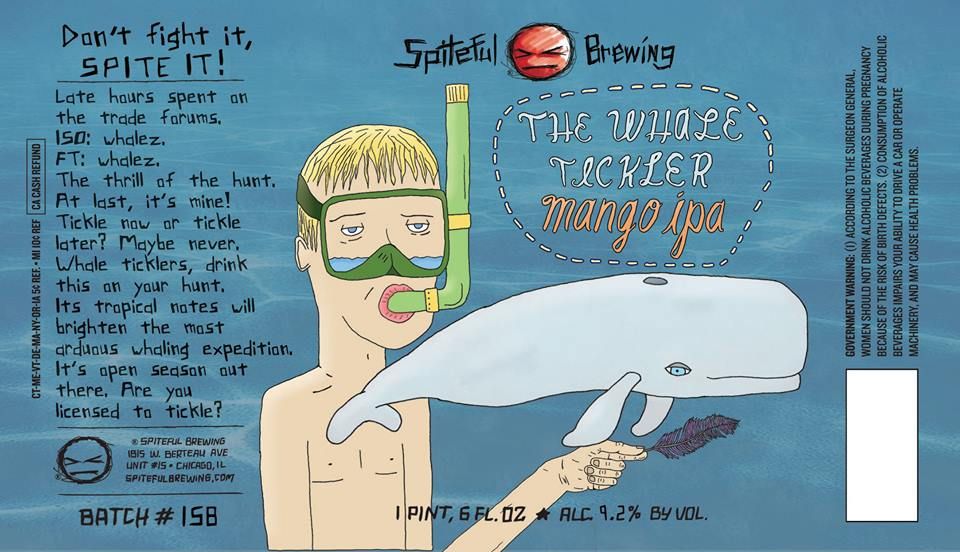
Whale ticklers, drink this on your hunt. Its tropical notes will brighten the most arduous whaling expedition. It's open season out there. Are you licensed to tickle? Spiteful's The Whale Tickler Mango IPA (www.beeradvocate.com/community/threads/spiteful-the-whale-tickler-the-beer-for-all-you-whale-hunters.206957/). 


In 1851, well-documented alcoholic Herman Melville wrote this American classic in Pittsfield, MA. It all comes full circle 160 years later, with Andrew Herwig’s Ahab Lager. I bet it pairs very nicely with the Cliffs Notes version of the book.
“Based on the American classic novel Moby Dick, and its ruthless, tormented character Captain Ahab. Rough illustrations and muted colors allow the consumer to dive into the world Herman Melville created while incorporating a unique beverage experience. Exciting imagery of Ahab and the whale invoke a strong resurgence of the classic novel, bringing it to life.

Captain Ahab Lager beer bottle and package, designed by Andrew Herwig, from United States. Captain Ahab Lager is based on the American classic Moby Dick, and its ruthless tormented character Captain Ahab. Rough illustrations and muted colors allow the consumer to dive into the world Herman Melville created while incorporating a unique beverage experience. Depicting visuals of Ahab and the whale invoke a strong resurgence of the classic novel bringing it to life (http://designhey.com/captain-ahab-lager-package-design/).

I don’t understand why this is on here. Hey I’m all about interesting personal projects, but the photoshopping of the beer photos doesn’t even look real. This is just a digital rendering. This blog should be about real beer. Whether it’s home-brewed or brewed on a large scale doesn’t matter, but it needs to be real (www.ohbeautifulbeer.com/2011/08/ahab-lager/).

Captain Ahab's Revenge: Brewing Beer From An Ancient Whale Bone
What happens when an amateur paleontologist with a love for beer teams up with a microbiologist? Bone beer, or beer made from yeast scraped from a 35-million-year-old whale fossil, to be precise.
The new brew, dubbed Bone Dusters Paleo Ale, is a concoction created by amateur fossil hunter Jason Osborne of Paleo Quest, a nonprofit paleontology and geology advocacy group, and microbiologist Jasper Akerboom of the Lost Rhino Brewing Company in Ashburn, Va.
Like many scientific innovations, Bone Dusters came to Osborne late one night while he was drinking a beer.
What he discovered was a wild yeast subspecies, which the pair named Saccharomyces cerevisiae var protectus, after the yeast's host, protocetid whale "Eocetus wardii," an early whale ancestor that Osborne had described in a 2011 paper in the journal BioOne.
The whale was a prehistoric beast that had hind legs, molars and canine-like teeth. Scientists say it may have been amphibious, dwelling on both land and water.
To retrieve the fossils, Osborne went 30 feet down into a Virginia swamp wearing full scuba gear and equipped with a type of crab cage.
Akerboom says that the yeast is probably not nearly as old as the fossil it was scraped from, but he believes that it came from the swamp that the bones were found in. And it behaves in mysterious ways.
"The fermentation is so strange. It stops and then continues. That's something we haven't seen before, not from our brewing strains," says Akerboom (www.npr.org/blogs/thesalt/2014/07/15/


The name makes me think of a Whale Tail. No, not a tail of an actual whale. Do a Google Images search for whale tail and chances are you will quickly find out why I was disappointed with the graphics on this one. Pale ales being one step below an IPA (the only true style of beer) are worth checking out. Seeing that I've never tried this one before ...
Pours an amber with a thin head. No lacing in sight which is a knock. Aroma is more malty than what I like. Maybe a tiny whiff of hops. Not much in the aroma department. Taste is malty with hints of citrus. Not a big fan of the more malty beers. Tend to go for the hoppy ones. Aftertaste is slightly bitter. Almost soapy. This one is just an average beer. Nothing too outstanding (http://beerhobgoblin.blogspot.nl/2013/10/whales-tale-pale-ale.html).

Tja, bier brouwen van papier? Ik geloof het niet zo...

Er is wel bierpapier?
Gmund Bier Paper – with genuine brewer’s spent grain. Earthy, lively and authentic. For nature lovers (http://nl.gmund.com/shop/bier-papier.html?___store=13).

Ik vond het wel een goed boek, hopelijk is dit bier ook zo goed...